Overview
Clean Air Programme [NCAP]
Overview
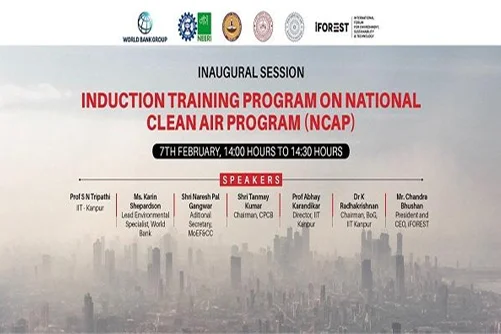
The “Overview of the National Clean Air Programme (NCAP)” course provides a comprehensive introduction to India’s flagship initiative aimed at combating air pollution. Launched in 2019 by the Ministry of Environment, Forest and Climate Change (MoEF&CC), the NCAP is a long-term, time-bound national strategy focused on reducing particulate matter (PM10 and PM2.5) concentrations and improving air quality across the country. :contentReference[oaicite:0]{index=0}
This course explores the vision, objectives, institutional framework, and implementation strategies of the NCAP. It covers the programme’s multi-sectoral approach involving central, state, and local governments, along with stakeholders such as research institutions, industries, and civil society organizations. Special emphasis is placed on city-specific action plans for non-attainment cities, air quality monitoring systems, and policy interventions designed to achieve sustainable environmental outcomes.
Learners will gain insights into NCAP targets, including the goal of achieving up to a 40% reduction in particulate matter concentrations by 2025–26 (compared to 2017 levels), and the importance of data-driven decision-making, public participation, and inter-agency coordination in addressing air pollution challenges. :contentReference[oaicite:1]{index=1}
Course Highlights
- Comprehensive Policy Understanding: In-depth coverage of NCAP’s objectives, structure, and national significance in addressing air pollution.
- Focus on Non-Attainment Cities: Detailed insights into city-specific action plans for over 130 cities failing to meet national air quality standards.
- Target-Oriented Approach: Understanding short-term and long-term pollution reduction targets, including PM reduction benchmarks.
- Monitoring & Data Systems: Overview of air quality monitoring infrastructure, data collection mechanisms, and dissemination platforms.
- Multi-Stakeholder Engagement: Role of ministries, state agencies, urban local bodies, research institutions, and community participation.
- Practical Policy Applications: Case-based understanding of emission control strategies, urban planning interventions, and governance mechanisms.
Who should attend
This course is designed for government officials, urban planners, environmental engineers, policymakers, consultants, researchers, NGO professionals, and students interested in environmental governance and air quality management. It is especially valuable for individuals seeking to understand the structure and implementation of India’s national air pollution control framework or those involved in developing or executing clean air action plans at the city or regional level.
Training Methodology
The course adopts a structured, self-paced learning methodology to ensure conceptual clarity and practical understanding:
- Begin with expert-led video lectures explaining the fundamentals and policy framework of NCAP.
- Explore thematic modules covering objectives, targets, implementation strategies, and governance mechanisms.
- Review supporting materials such as presentations and policy documents for deeper understanding.
- Analyze real-world applications, including city action plans and monitoring systems.
- Develop a comprehensive understanding of how national policies translate into local-level interventions.
Duration & mode
The course is designed to be completed over 1–2 days, with approximately 4–6 hours of total learning content. It is delivered in an online, self-paced format, allowing learners to access recorded lectures and downloadable resources anytime. Participants can revisit materials as needed, ensuring flexibility and convenience for working professionals and students alike.
Course Assessment and Certification
Each course is divided into multiple modules, and participants are required to complete a short assessment at the end of every module before proceeding to the next one. A minimum score of 75% is mandatory to unlock the subsequent module. Participants who do not achieve the required score will need to reattempt the assessment.
Upon completion of all modules, participants will be required to undertake a final online assessment for the course. Participants securing 80% or above in the final assessment will be awarded a course completion certificate.
Please note that only two attempts will be provided for the final assessment. Participants are therefore encouraged to carefully go through the course content and take the assessments seriously.
Course Content
- Overview and implementation Framework
- Quiz: Overview of the NCAP – M1.1
- Overview of roles and responsibilities of different stakeholders
- Quiz: Overview of NCAP – M1.2
- NCAP and XVFC – Allocation & Utilization
Enroll to access this lesson.
- Financial Management
- Quiz: Overview of the NCAP – Financial Management
- Convergence of Scheme under NCAP
- Quiz: Overview of the NCAP – Convergence of Schemes under NCAP
- Performance Assessment of Non-Attainment cities
Enroll to access this lesson.
- SVS
- Quiz: Overview of the NCAP – SVS
- Understanding Functions and Features of PRANA
- Quiz: Overview of the NCAP – PRANA

Instructor

Share this Course