Our Programme Home

Air Quality Management

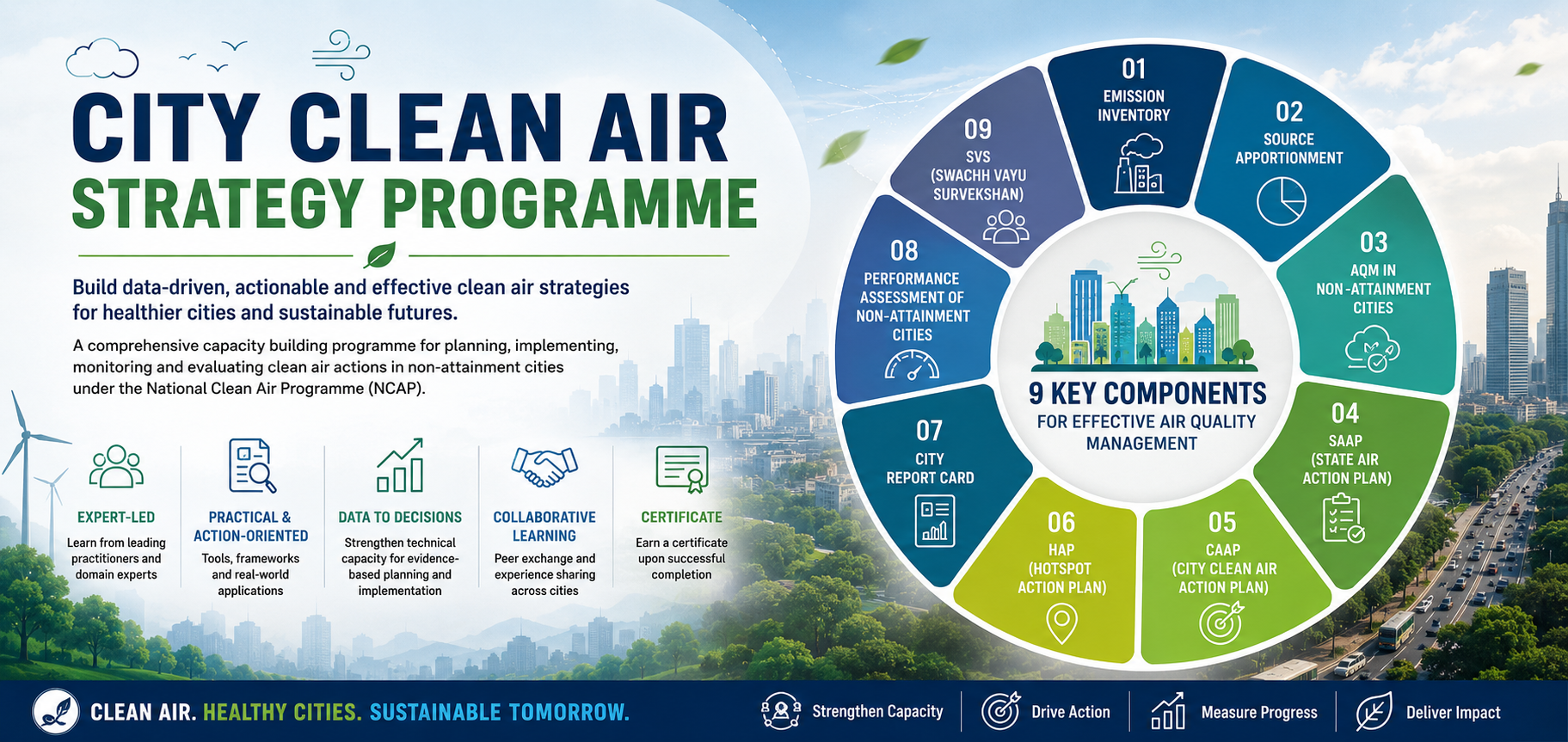
The Air Quality Management vertical at iFOREST Academy is designed to strengthen technical expertise and institutional capacity for planning, implementing, and monitoring clean air strategies at city, state, and national levels. The programme integrates City Air Action Strategies, enabling participants to design evidence-based city and hotspot action plans using emission inventories, sectoral prioritisation, and measurable performance indicators.

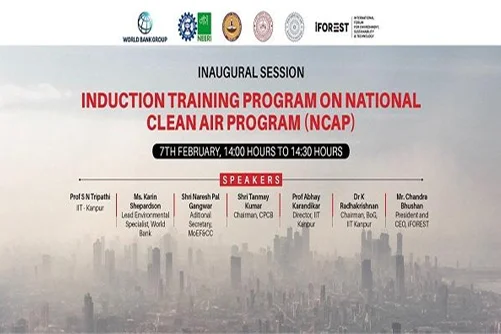
It provides in-depth orientation on the National Clean Air Programme (NCAP) covering planning frameworks, implementation mechanisms, performance-linked evaluation, and monitoring systems. It also builds capacity in real-time pollution monitoring, including ambient monitoring networks, CEMS/CEQMS, low-cost sensors, data validation, and interpretation for informed decision-making.

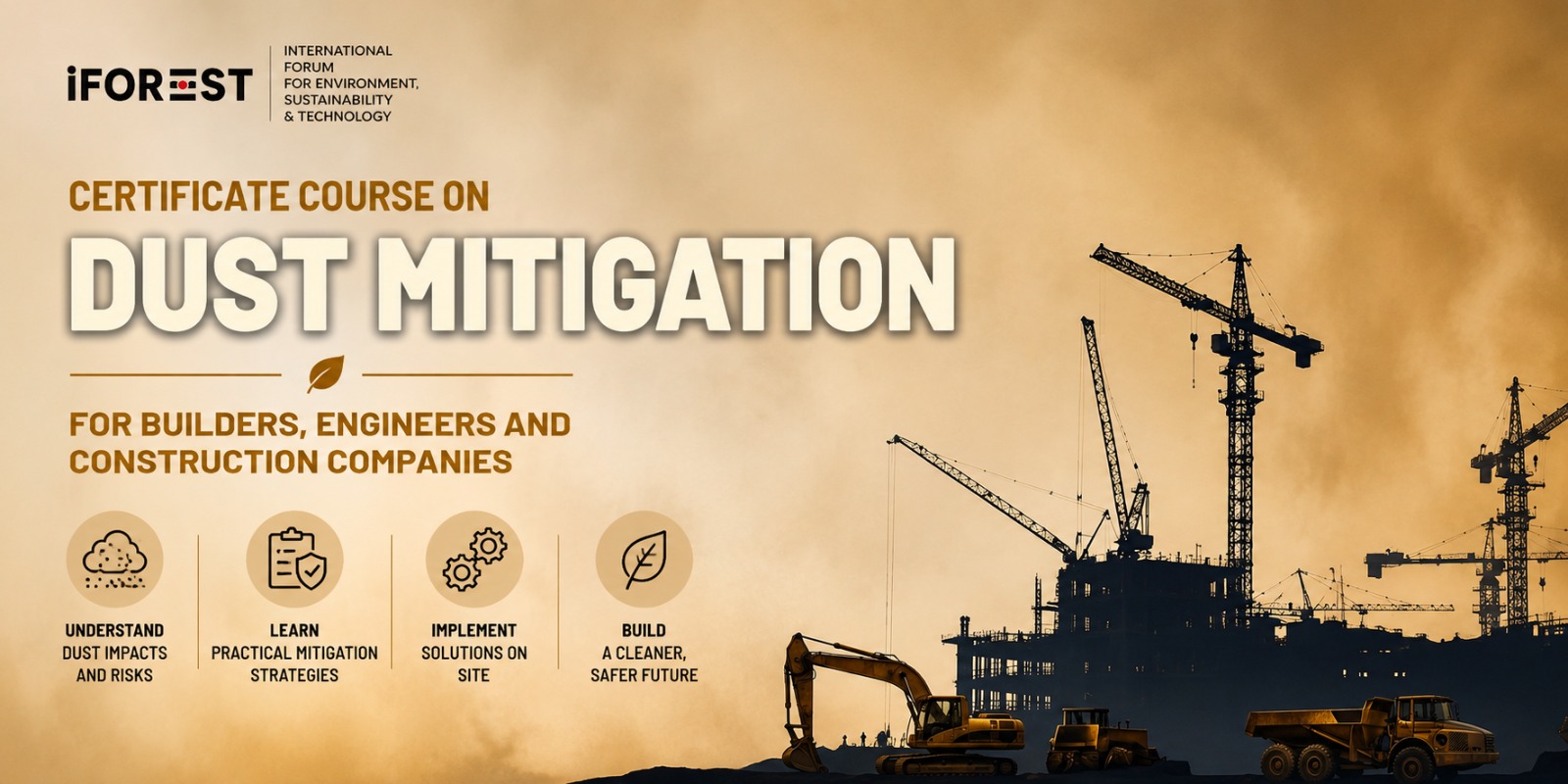
The vertical further equips participants with practical skills in conducting third-party audits to ensure transparency, compliance verification, and performance assessment, and offers specialised modules on dust management in the construction sector, focusing on on-site mitigation practices, regulatory compliance, and enforcement mechanisms.

Through a strong combination of scientific principles, regulatory frameworks, practical tools, and case-based learning, this vertical prepares professionals to translate clean air policy into measurable and sustainable on-ground impact.

Waste Management

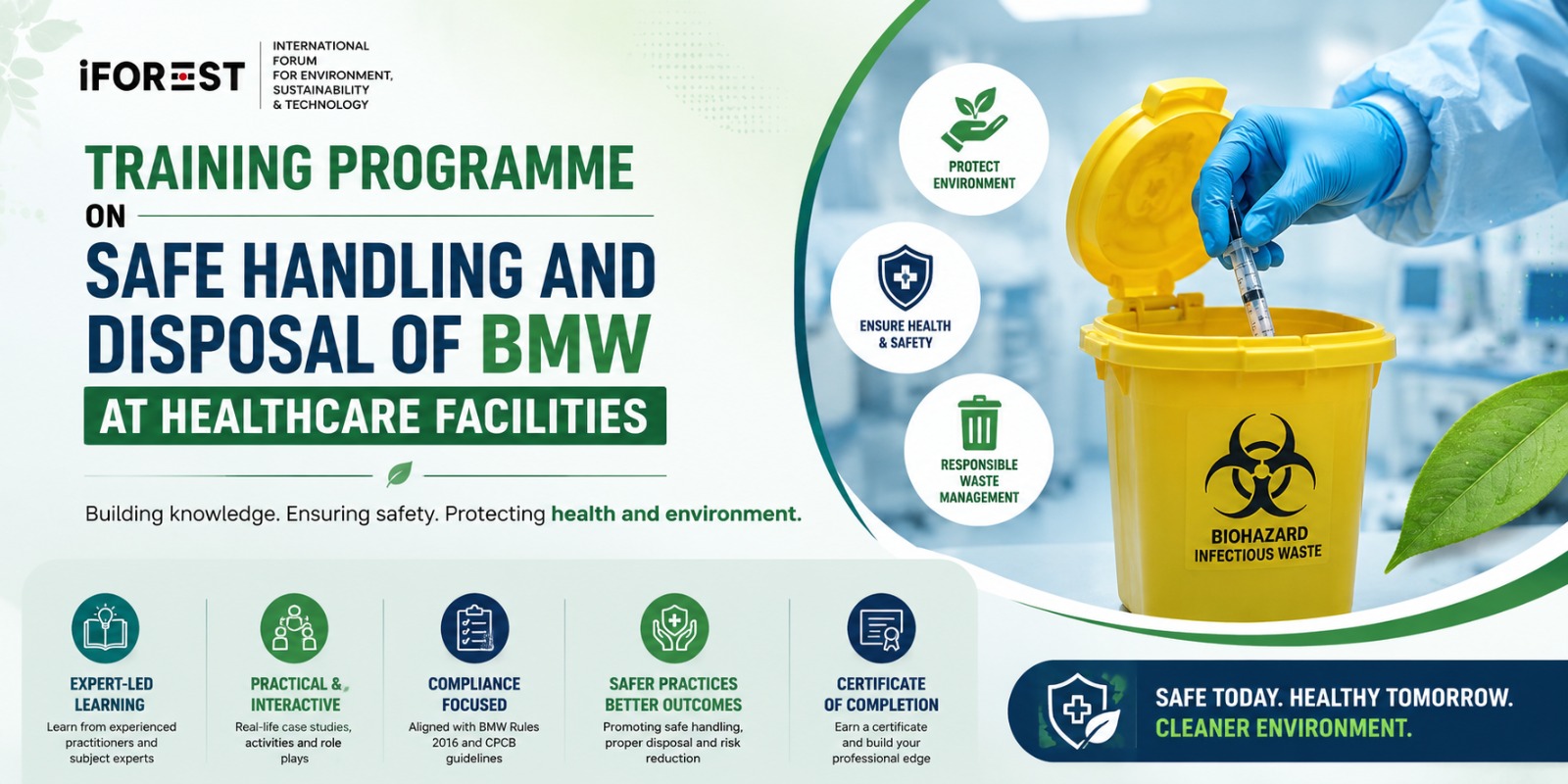
The Waste Management vertical trains practitioners on integrated, sustainable, and compliance-driven approaches to solid, plastic, and biomedical waste. Courses cover the entire waste value chain, from inventory and segregation systems to processing technologies, policy requirements, regulations and monitoring frameworks. Tailored modules provide sector-specific training under Swachh Bharat Mission, including municipal waste planning, plastic waste regulation, and safe biomedical waste handling for healthcare facilities.

Environmental and Social Impact Assessment

These courses strengthen understanding of environmental and social safeguards essential for responsible development. The vertical covers EIA, SIA, and EHSS audits, helping participants navigate regulatory procedures, impact evaluation methodologies, stakeholder engagement principles, and mitigation planning. Designed for consultants, regulators, and project proponents, the modules provide practical skills to conduct high-quality assessments aligned with legal, technical, and ethical standards.

Just Transition

The Just Transition vertical focuses on enabling regions and industries to shift towards cleaner, more sustainable economic pathways. Courses address mine reclamation, repurposing of thermal power plants, and clean energy transition planning. Participants gain knowledge on land restoration, resource optimisation, livelihood resilience, and governance models that support equitable and environmentally sound transition processes.

Responsible Business

This vertical equips corporate professionals with tools and frameworks to strengthen sustainability performance. Courses cover ESG principles, BRSR reporting, risk management, compliance, and disclosure standards. Participants learn how to integrate environmental and social responsibility into core business operations, meet regulatory expectations, and adopt globally aligned sustainability practices.

Data Science and Analysis

The Data Science and Analysis vertical builds analytical and technical capabilities for environmental research and decision-making. Courses include GIS, remote sensing, spatial mapping, and data-driven assessment methods. Participants learn how to analyse environmental data, interpret satellite imagery, and generate actionable insights that support planning, monitoring, and policy development.

Foundational Courses

iFOREST Academy's Foundational Courses equip new and mid-career professionals with the essential knowledge, frameworks, and competencies required to work effectively in India's environmental governance landscape. These programmes provide structured orientation on regulatory mandates, compliance processes, sectoral priorities, and practical tools needed for day-to-day decision-making. Designed for regulators, corporate professionals, and technical staff, the courses build strong grounding in environmental laws, monitoring systems, and institutional responsibilities.